Not a Tick Box, Not a Billing Code: What It Actually Means to Be With a Patient
Some of the most important moments in healthcare aren’t captured by checklists and clinical guidelines. They happen in the space between clinicians and patients.
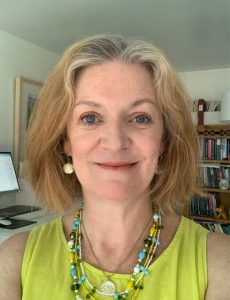
Dr. Martina Ann Kelly
The subtle cues and factors in a strong patient-practitioner connection are at the core of Dr. Martina Ann Kelly’s research. She is a family physician, professor of family medicine, and formerly the undergraduate director for family medicine at the Cumming School of Medicine, University of Calgary.
In 2022, she received the AFMC–Gold Humanism Award and Lecture for her role as “a visionary advocate for the role of our senses in compassionate patient care and a leading investigator of the exquisite nuances of true human connection.” (Read more about her award here.)
The Gold Foundation’s relationship with Dr. Kelly began in 2013, when the Foundation’s Mapping the Landscape, Journeying Together initiative funded two literature review grants involving Dr. Kelly and her University of Calgary colleagues: “Experience of touch in healthcare: A meta-ethnography across the healthcare professions” and “How can qualitative evidence synthesis contribute to humanistic healthcare? A meta-study.”
The touch meta-ethnography, in particular, is a critical root in Dr. Kelly’s research: what happens in the space between physician and patient that words, checklists, and clinical guidelines cannot fully capture.
I had the pleasure of speaking with Dr. Kelly recently, and in our conversation she noted that the smaller scale of her research can cause some to overlook it. But she worries that if researchers don’t take up these kinds of questions, the values underpinning clinical practice may quietly disappear from the literature. She sees one of Gold’s roles as building community, so researchers doing this quieter work don’t feel isolated inside large institutions. My hope is that this Roundup facilitates that community building by introducing Dr. Kelly to those not familiar with her work and serving as a reunion to those who are.
In the announcement about her 2022 lecture, Dr. Kelly uses the term “solicitude.” In the context of doctor-patient relationships, I was more familiar with “solidarity,” a claim about belonging to the same collective. I find immense value in Dr. Kelly’s use of solicitude instead: the particular, active attentiveness to the person in front of you. Solicitude anchors this work firmly in humanism and benefits both patient and clinician. It is the goal for those spaces in between, spaces that unite provider and patient into a collective “we.”
This “we” was a core theme in our conversation. Rather than prioritizing what a physician does for a patient, Dr. Kelly kept circling back to something done with them: “They’re not a tick box, they’re not a billing code, you have to dwell with the person.” “Being” over “doing” is a small grammatical flip, but it’s the thread that ties all three studies below together.
Below you’ll trace that thread across three different career moments: physicians sitting with dying patients, residents learning to see multimorbid patients as more than a list of diagnoses, and preceptors, years into practice, still uneasy about the emotional weight of a prescription pad. Read together, they suggest something Dr. Kelly’s research has long argued: that the hardest and most human parts of medicine do not resolve with experience. They have to be practiced, again and again, for as long as one is a doctor.
Acknowledging existential moments and meaning-making in palliative care: A hermeneutic study of physicians’ experience. Kelly, M.A., McLeod, E. Palliative and Supportive Care 23 (2025): e120. Access the Free Article
What This qualitative study examined how palliative care physicians experience meaning when caring for patients, using an interpretive approach (hermeneutic phenomenology, informed by philosophers Martin Heidegger and Hans-Georg Gadamer) that explores the texture of lived experience rather than testing a hypothesis. Ten physicians completed semi-structured interviews about meaningful encounters, reflecting on their experiences of time, body, space, and relationships. Across 36 recounted moments, two interpretive concepts emerged: connection and transformation. Connection occurred when physician and patient together acknowledged existential suffering on a personal, human level. Participants described a shift from “patient-physician hierarchy” to “person-to-person,” where the exchange became, as one physician put it, “doing by being,” actively present rather than solving or fixing a clinical problem. Transformation described the lasting effect on physicians themselves: participants said these brief moments, often lasting only seconds or minutes, renewed their professional identity, purpose, and commitment to the work, and were mutually satisfying for patient and physician alike.
So What Drawing on Heidegger and Emmanuel Levinas, the authors argue these moments were experienced not as ordinary clock time but as kairos, a weightier kind of time charged with the opportunity to do the right thing, in contrast to the routine passage of minutes and hours. They describe these encounters as a form of ethical witnessing: encountering the reality of another person’s presence awakens a responsibility to care for them. The authors connect this directly to burnout: existential burnout is a personal loss of coherence and meaning in clinical work, while finding meaning through these encounters is associated with greater job satisfaction, wellbeing, and a buffer against the erosive effects of continual exposure to suffering and death.
Now What The authors call for integrating reflective practice into routine clinical culture, rather than treating it as an optional extra outside already-depleted physicians’ time. They point to individual, group, and written reflection formats, and suggest this work be built into mindful practice initiatives, wellness programming, and education workshops, both as a sustaining practice for physicians and as a therapeutic, educational tool for trainees and physicians experiencing burnout or demoralization.
This first study drew on ten palliative care physicians only. Readers outside palliative care may reasonably ask whether kairos and “doing by being” hold up in faster-moving, less mortality-facing specialties. The next article, on family medicine residents learning to manage patients with many chronic conditions, offers one useful test case.
Bespoke to the patient: a qualitative study on learning to manage multimorbidity in family medicine. Kelly, M.A., Penner, K., Johnston, A. Canadian Medical Education Journal (2025). In Press. Access the Free Article
What This qualitative study explored how family medicine residents learn to manage multimorbidity through four focus groups with 28 residents training in urban and rural settings in Western Canada. The analysis (reflexive thematic analysis, a method for identifying patterns across a dataset while treating the researchers’ own perspective as part of the interpretive process) was informed by two concepts: generalism, a model of care centered on the whole person rather than a single disease, and adaptive expertise, the capacity to apply knowledge efficiently to familiar problems while flexibly innovating for novel or complex ones. Three themes emerged. First, residents described a shift from “gathering the list” of diagnoses as undergraduates toward an approach they called “bespoke to the patient,” incorporating a patient’s home life, finances, and goals rather than addressing conditions in isolation. Second, this required flexible consulting: pre-charting, clustering concerns across visits, and tolerating “a lot more grey” than expected. Third, residents recognized systemic and logistical demands: navigating time pressure, guideline conflicts, and barriers such as lack of insurance coverage for services like physiotherapy.
So What The authors connect these findings to a component of adaptive expertise called “preparation for future learning,” the ability to learn and invent new approaches for unfamiliar problems rather than apply a fixed procedure. As novice clinicians, residents initially defaulted to exhaustive, checklist-style data collection, aiming to “not miss anything.” Over time, they shifted toward understanding how multimorbidity shaped a patient’s actual life, work, and financial constraints, adapting their consultation style accordingly. This shift was uncomfortable: residents described genuine discomfort deviating from guidelines and deciding under uncertainty, which the authors frame as productive struggle that built adaptive capacity rather than a problem to eliminate. Notably, residents identified patients themselves, not textbooks or lectures, as their most valuable learning resource, driven by longitudinal exposure to a wide variety of patients, preceptor feedback, and increasing clinical autonomy.
Now What Citing Francis Peabody’s 1927 axiom that “the secret of caring for the patient is in caring for the patient” (Peabody is considered one of the founders of medical humanism; you can read the original lecture here), the authors recommend shifting educational emphasis away from checklist-driven teaching and toward cultivating generalist skills centered on understanding the patient. Practical suggestions include drawing out social determinants of health that complicate guideline-based care; treating navigation of health system constraints (insurance, specialist access, service shortages) as a teachable skill rather than an incidental frustration; promoting shared decision-making under clinical uncertainty; and helping residents recognize when an allied health team member, not the physician, is best positioned to help. The authors see the resident’s role as orchestrating that team, and call for structured, “safe” opportunities to sit with clinical uncertainty and reflect on it, rather than treating uncertainty as something to resolve quickly.
Both studies so far describe the same unlearning: Medicine’s default mode, list-gathering, checklist logic, “not missing anything,” has to be actively set aside before a more relational, particular — humanistic — way of seeing the patient can take hold. The next study asks whether that unlearning is ever fully finished, even for physicians who’ve been teaching for years.
Management of sleep disorder by preceptors in a family medicine residency program in Calgary, Alberta: a mixed-methods study. Cheung, S., O’Beirne, M., Hill, T., Huyghebaert, T., Keller, S., Kelly, M. CMAJ Open (2023). Access Free Article
What This mixed-methods study combined a numeric survey with in-depth interviews to examine how family physician preceptors manage sleep disorder, and by extension, how they model prescribing behavior for the residents they train. Of 76 preceptors invited, 47 completed the survey and 10 took part in follow-up interviews built around short hypothetical clinical vignettes. The survey showed high confidence: most preceptors felt equipped to use non-drug approaches (72%), had actively tried to reduce their sedative prescribing (91%), and felt able to respond empathically to patients even when not prescribing (96%). Despite this near-unanimous self-confidence, their sense of what patients actually wanted was far less settled, with responses split between believing patients would be dissatisfied without a prescription (23%), feeling unsure (45%), and disagreeing outright (32%).
The interviews surfaced three themes: Preceptors treated sleep disturbance as “a symptom, not a diagnosis,” requiring an individualized approach, comfort with uncertainty, and at times “breaking the rules” to do right by the patient; nearly all described a strong reluctance to prescribe sedatives, discussing them in emotional terms such as “hating” or “not loving” the drugs; and despite this stated reluctance, every participant reported prescribing sedatives at times, in situations they consistently framed as “exceptions,” such as acute grief, short-term crises, or harm-reduction cases.
So What The authors argue these individual “exceptions” were not deviations but reflections of a shared, consistent social norm. They connect this to the broader social history of sedative prescribing: decades of concern about overuse have formed an implicit equation between being a “good physician” and avoiding sedatives altogether, reinforced by prescription monitoring and discomfort second-guessing a colleague’s prescribing. This produced real emotional dissonance: Preceptors were confident in their nonpharmacologic skills, yet anxious about disappointing patients and uneasy about legitimate cases where medication was clinically appropriate. The authors note this mirrors opioid prescribing, where fear of harm can tip into reflexive avoidance, sometimes to the detriment of patients who could benefit from short-term treatment.
Now What The authors call for open discussion of the emotional and social pressures shaping prescribing decisions, arguing that naming these pressures directly, rather than treating each legitimate prescription as a quiet exception, could ease that dissonance and support more balanced practice. They point to evidence that patients, when informed of risks and offered genuine support, are often receptive to non-drug alternatives, suggesting physicians may overestimate how much patients will push back. These findings will directly inform how their residency program trains residents on sedative and hypnotic use going forward.
I hope the reader sees the same strong throughline here that I do, that uncertainty isn’t a phase that clinicians graduate out of and leave forever. Uncertainty is a permanent condition of relational medicine, from residents learning to tolerate “a lot more grey” to preceptors years into practice describing “comfort with uncertainty” as a hard-won skill rather than a settled one.
Dr. Kelly said to me: “being with the patient is essential. It sounds corny, it sounds so silly and simple, and yet we make it so hard. We put computers in the way, we put billing codes, we put scribes, we put patient navigators, we’re making it much more complex. But the heart is rather simple.”
Reading her work alongside that observation, I found myself thinking about the inverse of something I noted in the conclusion to the “Humanism in AI” Research Roundup, where researchers highlighted AI’s potential as a tool clinicians could use to cultivate more humanistic patient encounters. AI’s most seductive promise is exhaustive, error-free recall, a system built to never miss anything. But nothing in the research profiled here suggests that’s where good doctoring actually lives. A line from Dr. Kelly’s own 2025 paper is relevant here. She cites from Viktor Frankl’s “Man’s Search for Meaning”: “suffering ceases to be suffering in some way at the moment it finds a meaning,” and meaning, this research keeps showing us, is not found by any checklist. It’s found in the moments that resist standardization altogether: sunlight through a window, the grey a resident learns to tolerate, the discomfort a preceptor still carries years into practice.
Dr. Kelly’s next projects, “Silence in physician clinical practice: a scoping review protocol“>” and “Researching the acoustics of clinical care” are currently underway. I am hopeful that her results provide even further evidence and tools to move this work even farther.
If these findings resonate, I encourage you to explore Gold’s own Tell Me More ® program, a tool built around exactly this kind of reflective, relational practice that you can bring into your own work to cultivate solicitude with your own patients.
To receive email notification of future editions of the Jeffrey Silver Humanism in Healthcare Research Roundup, enter your information here and select “Research Roundup” from the checkboxes at the bottom. Read previous posts in this series.